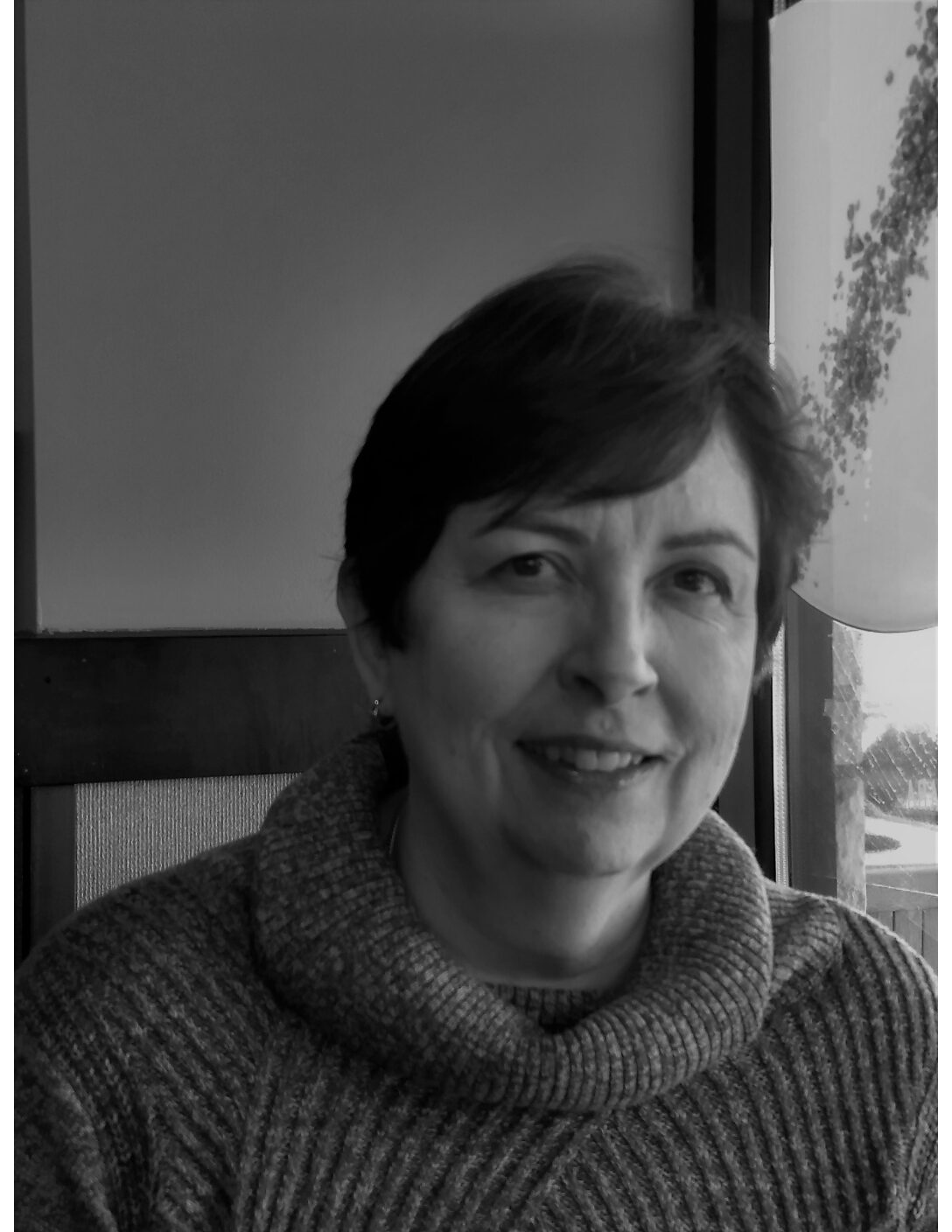
Poet, novelist, and nonfiction writer Adrian Gibbons Koesters spent much of her childhood in and around the Union Square neighborhood of southwest Baltimore. She lives in Omaha, Nebraska. In this sequel to Union Square, it is 1964 Baltimore, where Fr. John Martin has been haunted by those two questions every day for a dozen years. His god-brother, Jezriel Heath, walks all over the city in service of his faith, trying to make sense of the contemplative visions that have begun to visit him. John’s eight-year-old cousin Marnie, whose Catholic world is “too wonderful, too exciting,” is the champion of her best friend, Alice, who clings to Marnie as safety against her own hidden sorrows and traumas. In this supernaturally charged world, Miraculous Medal looks within each character to reveal “the most important thing,” a world where faith is molded by violence and happiness, ignorance and insight, blind cynicism and equally blind confidence. All four navigate in their adult or childish ways the temptations of suffering and salvation, and each faces a reckoning that accompanies that temptation. Rich in humor and compassion, Miraculous Medal carries the reader to a moment in urban America and Catholic culture on the threshold of radical change, a community unfolding inside a tattered but still-miraculous parochial world.
Q: What drew you to writing about Baltimore and the neighborhood of Union Square?
A: I was born in Baltimore, but actually only lived there until I was about sixteen. About half of that time was spent in the US neighborhood, where my grandmother lived—and where, incidentally, I was born, at Bones Secours hospital, and later went to school at St. Martins for two years during grade school. I also lived there for the last couple of years before I moved, so being there in my early teen years also left a strong impression. Baltimore is a fascinating place, but I know that I have never lived anywhere so—for me—fascinating as that particular neighborhood. It was clearly one that had at one time been very well-off and respectable, and part of what I wanted to do in this trilogy of books, of which Miraculous Medal is the second, is show the progression, or more aptly, the degeneration of the place. But as a child, despite its deprivations and even horrors, I thought it was a banquet of riches, of all kinds.
Q: Despite Miraculous Medal taking place in a very different time, we still see many themes continuing in today’s society. In the divided society that we live in today, how do you see that reflective in the variety of characters you feature in Miraculous Medal?
A: In my view, there is nothing as terrible about the human condition as the tendency to dominate each other, and certainly racism and sexism are the outstanding examples of domination through history. I think race bigotry is every bit as terrible today as it was then, especially in terms of the larger, institutional level, how people of color especially continue to be marginalized—and if you look at a city like Baltimore, despite their clearly constituting the majority of the city’s population. When I was teaching, for the upper-level writing class one of the books that students could choose to present as a teaching project was Mr. Ta-Nehesi Coates’s The Beautiful Struggle, which is a memoir largely about his family and young life in the area north of the one in which I grew up. It’s an amazing book, one that clearly shows the depth of what racism does to us.
But what in many ways is even more terrible, and in some ways unfathomable in this day and age, is how people continue to feel about other people, the inexplicable distaste we can have for those who are different (and this is far from confined to any one color group as I see it), and how we objectify them, and how deep this goes. In my neighborhood, the Black people who lived there did not live on the main streets, they were terribly poor, and the open, disgusting violence and disrespect that they lived with every day was every bit as much part of the fabric of my life as anything else. So, what I wanted to do with Mr. Jeb Heath, and all of the Maurice’s, was to show them as I found them as a little girl and a teenager—in other words, in my view, as people to whom I was close and of whom I was fond and loved (although, we never knew a family like the Maurice’s, sadly that was pure invention). At the same time, I wanted to show that as far as either Jeb or Fr. John Martin could enter into the life of the other, there was only so far that this could be possible, with a great deal of misunderstanding on both sides.
The other theme, which I didn’t know if I could write about after all, is the severe sexual abuse of children, including abuse by Catholic clergy. The one thing I want to say about that is that I remain Catholic in my identity, and my desire in writing about this has nothing to do with expressing rage (which I have plenty of) or to depict anything salacious for those who would find that kind of awful violence to be so. What is very different is that today one can write about these things and no longer have to pretend, especially when talking about the Church, that they do not.
Q: How has your professional journey as an academic helped in the process of creating this world of Union Square and Miraculous Medal?
A: Well, that’s kind of you to ask, but really, I came late to the academic world, as a student in my 40s, and did not really make the academy a career in the end. But as one writer I know has said, what getting my master’s degree and Ph.D. did for me was give me the time and space (and great encouragement) to develop my work. I don’t know how I could have achieved that in any other way. It was a wonderful opportunity and a great gift. I deeply value the students that I taught and learned very much from them, but as a writer, you simply can’t replicate that kind of time and space and I continue to benefit from those years in ways I can hardly express.
Q: What made you want to continue with the world that you created in Union Square?
A: That one is actually pretty amusing—the three parts of the story had begun as a single novel. At that time, I had been mostly writing poetry, and didn’t think about prose all that much, but I did feel that something of the story of this place ought to be told, but that probably I would do so in nonfiction or memoir, at least that’s what I had in mind. A friend of mine at school, though, sort of dragged me into a fiction workshop whose emphasis was the novel or some other long-form prose. I didn’t think it would come too much, and when I started, I really didn’t know what I was doing. After a very short time, I had so many characters and scenes going that it was impossible to follow them, and that’s when I realized I had much more than one book on my hands. I do have a memoir in mind, but for the kind of interior expression that I have been aiming for, fiction is much the better choice. And, as a teacher of mine once said, in fiction you can make it turn out how you want, so that’s always good. After the third book, which will take place in 1968, I am not sure I’ll write a novel set in Baltimore again, but we’ll see.
Q: In what ways does Miraculous Medal differ from Union Square? Has this continuation resulted in any new revelation or understanding of the distinct world and time you enter in these books?
A: That’s a great question and thank you for it. The two books share two distinct strategies, in that there are four main characters (five in US) from whose very close third-person point of view one experiences a particular, set time. However, I see US as much more of an “extroverted” book in that people go many more places and do many more things, and in fact there are many more extroverted characters in that book. US is about personal violence, in the many ways that it raises its terrible head. Religion is more of a cultural marker and faith and belief less a deeply felt experience.
But MM is nearly the opposite, a very introverted book, and was envisioned as such from the beginning. For one thing, it occurs at a time when I myself was still a very little girl, and for that reason, I am acutely attuned to the things little girls would say and do, and I can have Marnie and Alice say and do them in voices that I can still conjure up with no effort at all. Jeb Heath is obviously a very reserved person, as is John Martin. The main impetus for the tone of the novel, the greater lack of “things going on” or people going outside of the neighborhood, is that I wanted to write a religious novel for whose characters belief in God and attachment to a faith tradition is serious, and beautiful, business. I hope I achieved that. There are clear connections to faith and religion in this story.
Q: How has your own relationship with religion made present in your novel? Were there any conflicts in telling this story?
A: As I say, if I were to answer the question of what the book is “about,” I’d say it’s about the personal experience of faith and religion. If I could recover the Catholic Church of my childhood, I don’t know that I’d want to do that, but it left the deepest marks on my thinking, perspective, and really on my soul that anything could do. The staying in the church and the staying away from it have both been present in my life, and over time one has been more prominent than the other, but it has gone back and forth. I think being able to tell the ambiguity that comes with any part of one’s life certainly is present in this book—again, much more so than was true of US. Conflicts and struggles are part of any story that you really want to tell, I think, and probably that’s why you want to tell them.
Q: In Miraculous Medal you have created extremely distinct and unique characters. What was the process like getting into these characters minds? Did you require any outside research to truly develop your characters?
A: This is possibly the best part for me, as I love getting deep into a character, finding her or his voice (Marnie was so much fun I can’t tell you), and figuring out what they do next. I did minimal research for the characters, mostly little things having to do with how long it would take for Fr. John to get ordained, what the Black Catholic parishes were like and what their histories were (for example, I didn’t know how early on Black men had been ordained deacons), and some topographical things. It’s not meant to be an atlas of 1964 by any means, but I drew on my own knowledge and experience of the place. And the other great gift of that neighborhood is the sheer wealth of different ways people spoke and acted, so I felt like I was robbing Peter to pay myself and my characters a lot of the time.
Q: Throughout Miraculous Medal, you use themes of religious experience and human weakness to explore the character’s internal struggles. What was the inspiration behind these themes and how have you seen these play out in your own life?
A: I think if you spend any time on earth at all, you’ll hit your head against human weakness, and how you encounter and process it can be greatly influenced by your faith tradition. A Lutheran friend of mine and I are competitive about which religion engenders the most guilt and how that is expressed and how you live with it as an adult. We’re mostly joking, but not really. Though I hate the wholesale phrase, “Catholic guilt,” I have to acknowledge that it’s there (or it was there) and it also runs pretty deep. So that when you, as a child, have something happen in your life over which you have no control (as happened to Jeb and Alice), you feel you must have done something to make it happen—that the weakness was yours, and the fault. This is a universal tendency of children, for sure, but then the overlay of parts of your religion that agree with that tendency is very difficult. The parts of your religious education that say, “Yes, you are guilty” to whatever it might be, that has a lifelong impact.
Q: What is the main message you hope readers take away from Miraculous Medal?
A: Very honestly, I’m not a great believer in messages to be taken away from books. I think good books (and I hope this is a good book), apart from giving us pleasure and introducing us to worlds and people we wouldn’t encounter otherwise, work on us very slowly at the “message” level, in ways we are often unconscious of. I think that is perhaps the best thing about them.
Q: What’s next with your writing?
A: Right now, I am working on a book of poems, which feels like a great break from prose, and hope to have that finished by summer. I am also working out a strategy for a memoir that I think is (finally) coming together but that has been pretty slow going. So, it will likely be a while before I start on the third book of the novel trilogy in earnest, but because that one really will require a great deal of research, I’ll be at that in bits and pieces along the way as well.